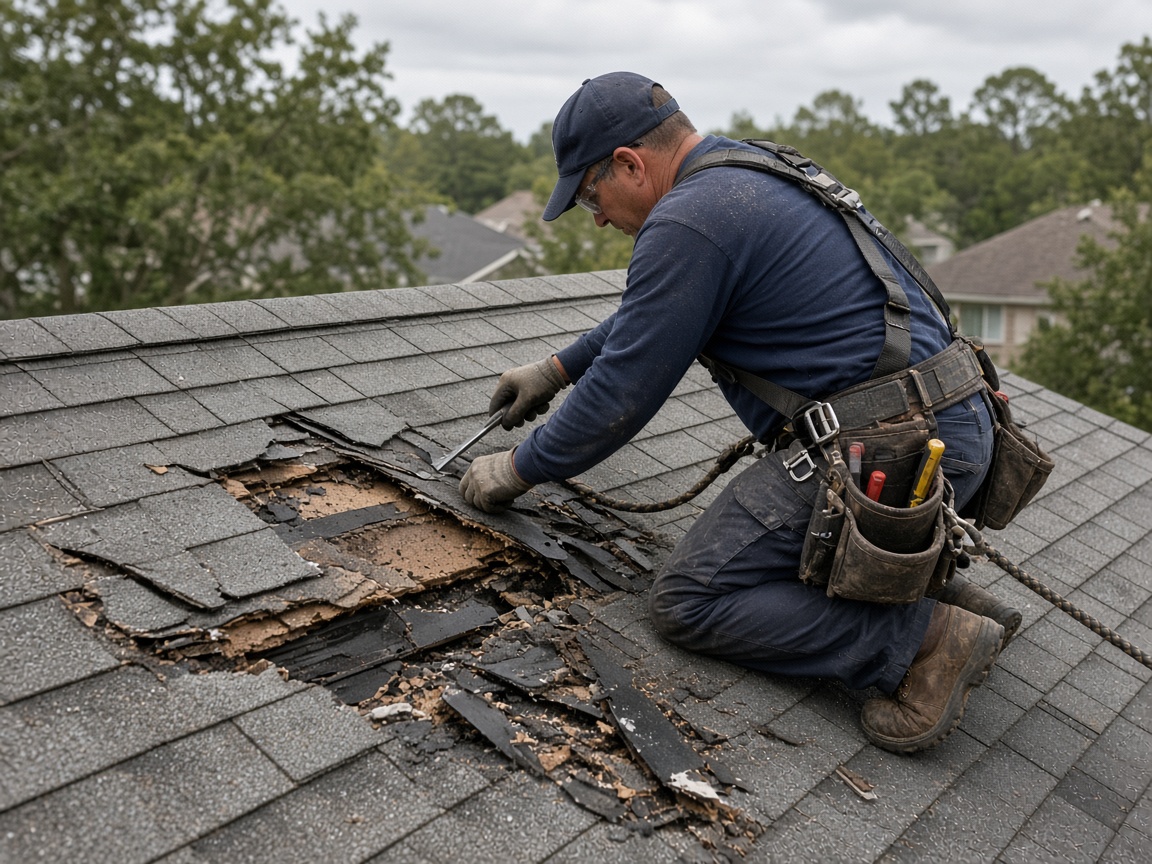
Cypress homes in Bridgeland and Towne Lake often feature asphalt shingle roofs installed over the last twenty years that take direct hits from summer thunderstorms rolling off the Gulf. High humidity keeps wood decking damp longer after leaks start, so small punctures from tree limbs or flying debris can rot sheathing before homeowners notice interior stains. The pros we connect you with inspect from the ridge down to the eaves, checking for lifted shingles along Cypress Creek where wind funnels between houses.
Mild winters mean fewer freeze-thaw cycles than up north, yet sudden hail events in spring still crack granules and expose felt underlayment. In neighborhoods near the Berry Center, older ranch-style homes with low-pitch roofs collect more standing water after heavy downpours, accelerating granule loss. Proper documentation of impact patterns matters when filing claims with insurers familiar with Katy and Houston storm corridors.
Repair crews working these jobs know to watch for hidden damage along valley flashings where runoff from Cypress Creek Lakes properties concentrates. They replace only the affected sections rather than entire slopes when the rest of the roof remains sound, preserving the original ventilation and ridge details typical in this area.
Seasonal Storm Patterns
Hot humid summers bring frequent afternoon cells that drop large hail on exposed south-facing slopes in Towne Lake. Mild winters allow quick scheduling but still require checking for wind-driven rain under step flashing on two-story homes common in Bridgeland.
Technician insight
In Cypress, the thing that catches most people out with Storm Damage Roof Repair is how quickly humidity lets small hail punctures turn into rotted decking on the north-facing slopes behind mature trees in Bridgeland and Towne Lake; homeowners often miss it until the stain shows up inside.
Hail Impact on Towne Lake Roof
Heavy spring hail struck a two-story home near Cypress Creek Lakes. Inspection revealed cracked shingles and dented valley flashing on the south slope with water already reaching the attic insulation. The pros we connect you with replaced the damaged courses, added new step flashing, and confirmed the ridge vent still drew properly. No further leaks appeared after the next rain.
How it works
- 1
Initial Assessment
The pros we connect you with arrive to document visible impact points, measure affected squares and photograph interior water marks before any work begins.
- 2
Tarping and Stabilization
Temporary tarps go over exposed areas to stop further water entry while the full scope is reviewed with the homeowner and insurance adjuster.
- 3
Material Matching and Repair
Matching shingles are sourced for the specific age and color of the existing roof in Cypress neighborhoods, then damaged sections are removed and replaced with proper underlayment and flashing.
- 4
Final Walkthrough
After cleanup, the crew reviews the repaired sections with the homeowner to confirm drainage and ventilation remain intact.
Pricing
Pricing depends on the number of squares affected, pitch, and whether decking replacement is needed after water intrusion.